Sudoku Online
Game in progress
06:44
Prompt number of uses: 0
Play Free Sudoku Now!
Sudoku is one of the most popular puzzle games of all time.
The goal of Sudoku is to fill a 9×9 grid with numbers so that each row, column and 3×3 section contain all
of the digits between 1 and 9.
As a logic puzzle, Sudoku is also an excellent brain game. If you play Sudoku daily,
you will soon start to see improvements in your concentration and overall brain power.
Start a game now. Within no time Sudoku free puzzles will be your favorite online game.
How to play Sudoku Online?
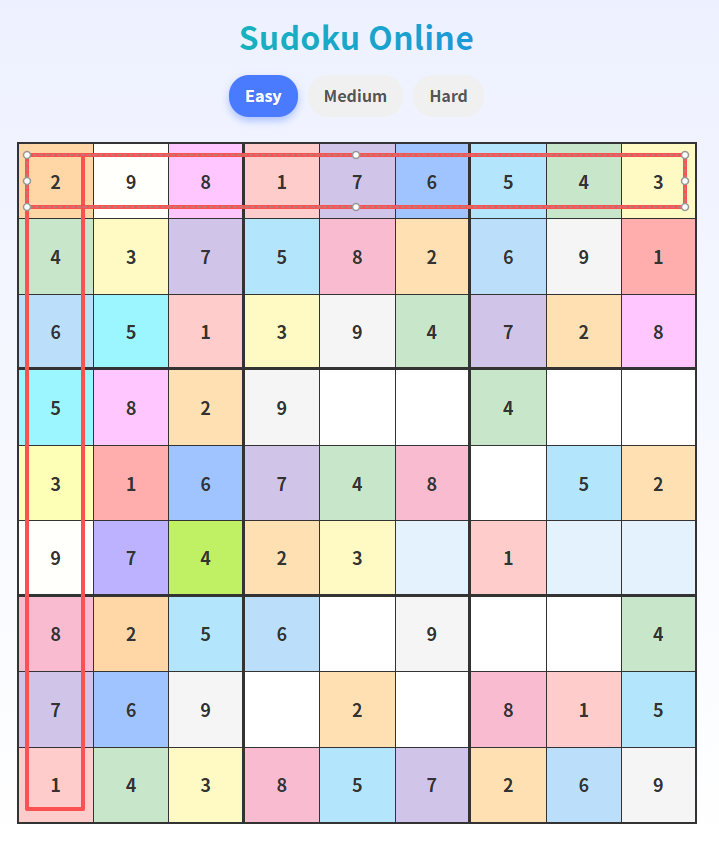
Understand the Sudoku Grid
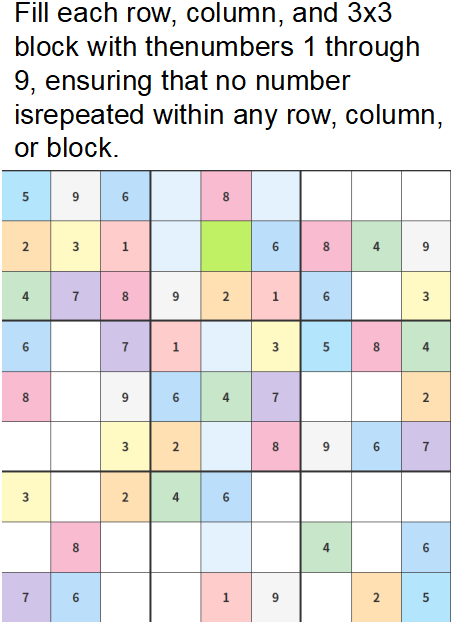
A standard Sudoku puzzle has a 9x9 grid, divided into nine 3x3 subgrids. Your goal is to fill each row,
column, and 3x3 box with the numbers 1 through 9 without repeating any number.
Start with the Clues - Sudoku Puzzles
Some numbers are pre-filled (called clues). Use these to begin solving the puzzle. Look for rows,
columns, or boxes that are almost filled, and try to figure out the missing numbers.
Scan Rows and Columns
For each empty square, check its row and column to see which numbers are already used. Eliminate
possibilities until you find the correct number for that spot.
Work Box by Box
Focus on one 3x3 subgrid at a time. Use the process of elimination to figure out where each number 1-9
should go in that box, based on what's already present in the rows and columns connected to it.
Double-check and Finish
After filling in all the squares, double-check that every row, column, and box has the numbers 1 through
9 without any repetition.
Common Sudoku Questions Answered
What is Sudoku?
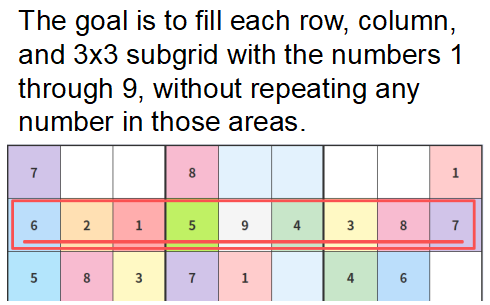
Sudoku is a logic-based number puzzle played on a 9x9 grid. The goal is to fill each row, column, and
3x3 subgrid with the numbers 1 through 9, without repeating any number in those areas.
How do I start solving a Sudoku puzzle?
Begin by looking for rows, columns, or 3x3 boxes that are almost complete. Use the given (pre-filled)
numbers to help determine which numbers are missing in each section.
Are there any strategies for solving Sudoku?
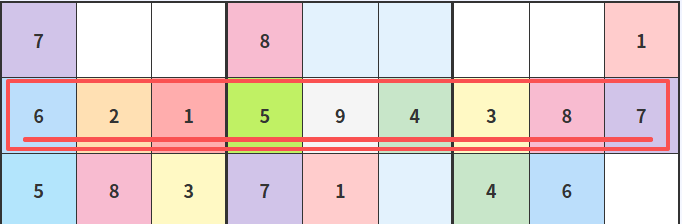
Yes, some common strategies include scanning rows, columns, and boxes to eliminate possibilities, using
the process of elimination, and pencil-marking potential numbers before deciding the correct one.
Can a Sudoku puzzle have more than one solution?
No, a properly designed Sudoku puzzle will have only one unique solution. If there seem to be multiple
possibilities, recheck your logic.
Is guessing allowed in Sudoku?
While guessing can sometimes work, Sudoku is a logic-based game, so ideally, every number should be
placed using logical deduction rather than trial and error.
What are hint, and how do I use them?
The hint button can help you solve Sudoku puzzles, when you don't know how to proceed to the next Sudoku
puzzles.
What happens if I make a mistake in Sudoku?
Mistakes can lead to conflicts in the grid, where a number is repeated in a row, column, or box. If you
realize a mistake, backtrack and correct it by reevaluating the numbers in that section.
About Sudoku
Sudoku is a popular number-based puzzle game that originated in Japan and has gained worldwide
popularity. The game consists of a 9x9 grid with numbers 1 to 9, where each number can only appear once
in each row, column and 3x3 sub-grid. The objective is to fill in the blank squares with the missing
numbers.
The puzzle can have multiple solutions and comes in varying levels of difficulty. It can range from easy
to challenging and is a great way to improve cognitive skills such as logic and concentration.
The game is played by using deduction and elimination techniques to find the missing numbers. It's a
great way to exercise the mind and can also be a fun activity for people of all ages. It can also help
in developing problem-solving skills, critical thinking and pattern recognition.
Sudoku has become a widespread game and can be found in many forms, including books, magazines,
newspapers, online games and mobile apps. It can also be played in solo or with a group.
In conclusion, Sudoku is a fun and challenging game that can be enjoyed by people of all ages. It is a
great way to improve cognitive skills and is widely available in various forms. So, if you're looking
for a mental challenge or just a fun way to pass the time, give sudoku a try.
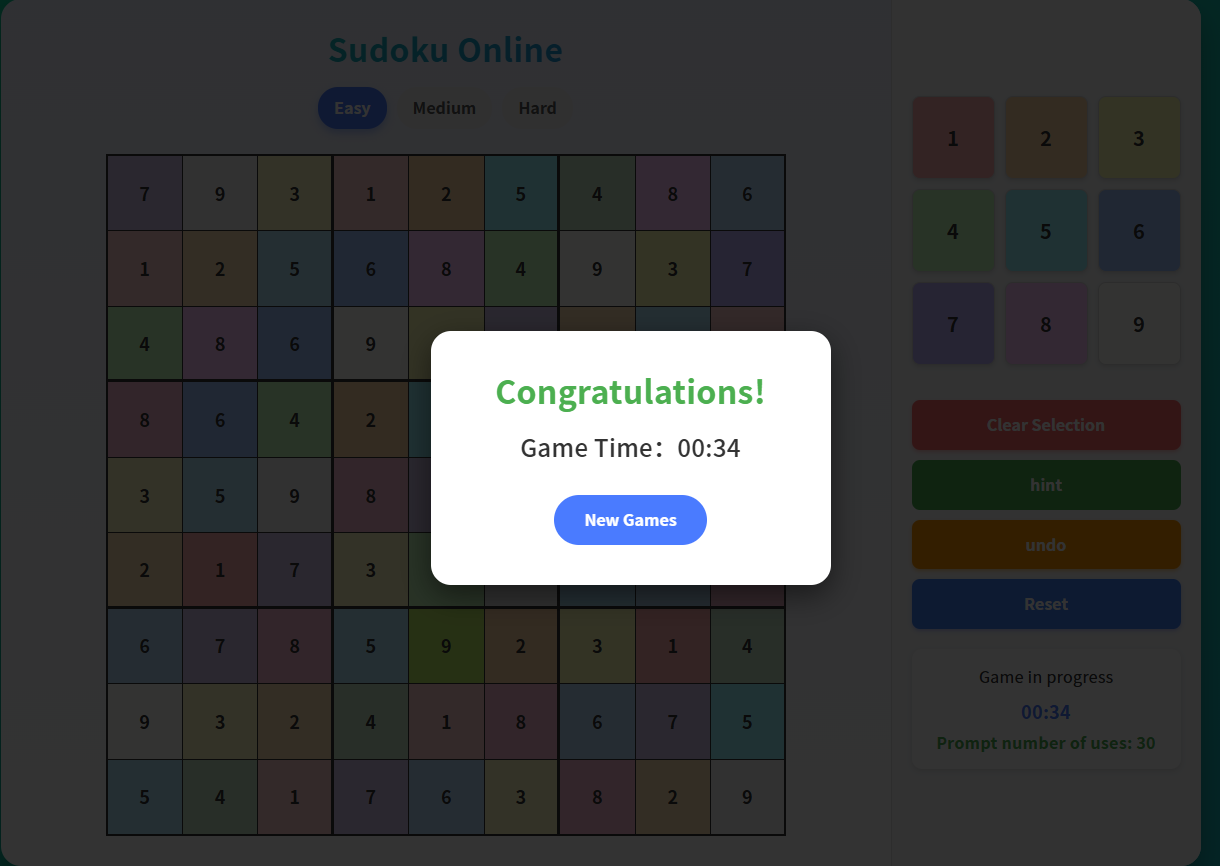
here are 6,670,903,752,021,072,936,960 possible combinations for completing a 9-by-9 Sudoku grid, but
only 5,472,730,538 of them really count for different solutions. Needlessly to say, you need a handful
of lifetimes to solve all of them.
Finally, I sincerely hope you can pass Sudoku puzzles of different difficulties!
