So you've seen those little number grids in newspapers or apps, and you're wondering what the fuss is all about. Maybe you tried one and got stuck, or perhaps you're just curious about how to play sudoku. Well, you're in the right place. I remember my first sudoku puzzle—it was in a magazine, and I spent hours staring at it, feeling completely lost. But once I got the hang of it, it became this addictive little brain teaser that I can't get enough of. In this guide, I'll walk you through everything you need to know, from the absolute basics to some sneaky tricks that'll make you feel like a pro. And yeah, I'll share some of my own blunders along the way, because let's be honest, we all make mistakes when we're learning how to play sudoku.
Sudoku isn't just about filling in numbers randomly. It's a logic puzzle that's been around for decades, and it's super popular because it's easy to learn but hard to master. The goal is simple: fill a 9x9 grid so that each row, each column, and each of the nine 3x3 subgrids contains all the digits from 1 to 9, without any repeats. Sounds straightforward, right? But wait, there's a catch—you can't just plop numbers wherever you want. You have to use deduction and a bit of patience. If you're looking for a fun way to sharpen your mind, learning how to play sudoku is a great start. I've seen people go from total newbies to solving puzzles in minutes, and it's all about understanding the rules and practicing.
What Is Sudoku and Why Should You Care?
Before we dive into the nitty-gritty of how to play sudoku, let's talk about what it actually is. Sudoku originated in Japan, but its roots go back to number puzzles from the 18th century. It's not a math game—you don't need to be good at arithmetic. Instead, it's all about logic and pattern recognition. I used to think it was for geniuses, but then I realized anyone can do it with a little guidance. The puzzle consists of a grid, usually 9x9, but there are variations like 4x4 or 6x6 for beginners. Some cells are pre-filled with numbers, and your job is to fill in the rest.
Why bother? Well, for one, it's a fantastic mental workout. Studies show that puzzles like sudoku can help improve memory and cognitive skills. Plus, it's a great way to unwind. I often play a quick game during my commute, and it helps me focus. But the best part? It's accessible. You can find sudoku puzzles everywhere—online, in books, or even as apps. If you're just starting out, learning how to play sudoku can feel daunting, but trust me, it's worth it. You'll start seeing patterns everywhere, and that "aha!" moment when you solve a tricky one is pure satisfaction.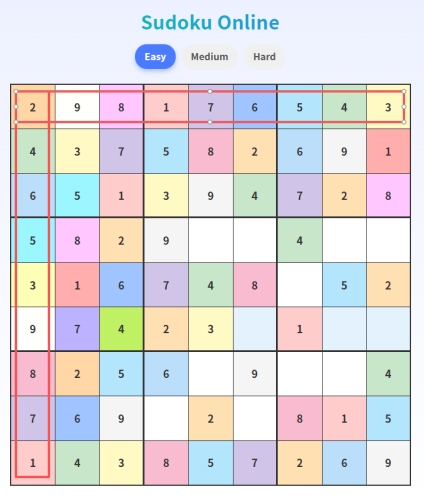
The Basic Rules of Sudoku
Alright, let's get down to the core of how to play sudoku. The rules are simple, but they can trip you up if you're not careful. Here's a breakdown:
- The Grid: It's a 9x9 square, divided into nine 3x3 subgrids (also called "regions" or "boxes"). Think of it as a big square made up of smaller squares.
- The Numbers: You only use digits 1 through 9. No zeros, no letters—just those nine numbers.
- The Objective: Fill the entire grid so that every row, every column, and every 3x3 subgrid contains each number from 1 to 9 exactly once. That means no repeats in any row, column, or box.
When you're first learning how to play sudoku, it helps to visualize it. I like to imagine the grid as a city with streets (rows and columns) and neighborhoods (subgrids). You can't have the same house number on the same street or in the same neighborhood. Simple, right? But here's where it gets tricky: the pre-filled numbers are your clues. They're fixed, and you can't change them. Your job is to use logic to figure out where the missing numbers go.
For example, if a row already has a 5, you can't put another 5 in that same row. Same for columns and subgrids. This might sound restrictive, but it's what makes the puzzle fun. You have to think several steps ahead. I remember my first puzzle—I kept putting numbers in randomly, and then I'd hit a dead end. It was frustrating, but it taught me to slow down and reason it out.
Getting Started: Your First Sudoku Puzzle
So, you're ready to try your hand at how to play sudoku? Great! Let's walk through a beginner-friendly approach. Start with an easy puzzle—look for ones with more pre-filled numbers, as they give you more clues. I usually recommend apps or websites that let you choose difficulty levels. When I began, I jumped into a medium puzzle and got overwhelmed. Don't make that mistake.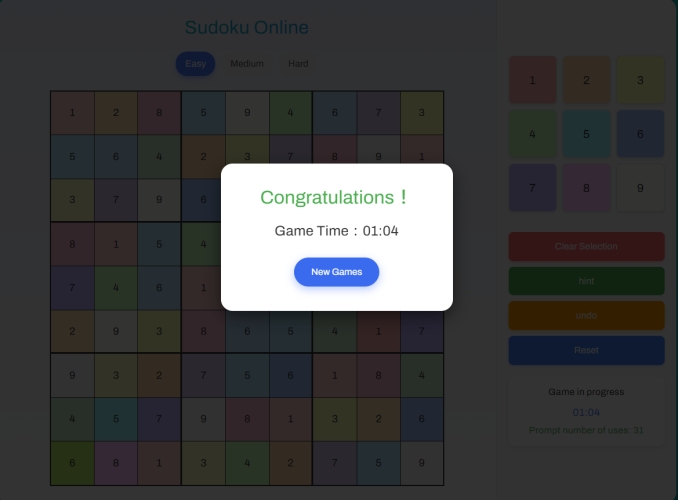
Here's a step-by-step method I use:
- Scan the Grid: Look for rows, columns, or subgrids that are almost full. If a row has eight numbers filled, the missing one is obvious.
- Focus on One Number: Pick a number, say 1, and see where it can go based on the existing ones.
- Use Pencil Marks: This is a pro tip—lightly write possible numbers in the corners of empty cells. It helps you keep track without committing.
I learned the hard way that rushing leads to errors. Once, I filled a whole section only to realize I'd duplicated a number. Had to erase everything and start over. Annoying, but it taught me to double-check. As you practice, you'll develop your own style. Some people like to start with rows, others with columns. There's no one right way to play sudoku, but having a system helps.
Essential Strategies for How to Play Sudoku
Now that you know the basics, let's talk strategies. These are the tricks that'll help you solve puzzles faster and with fewer headaches. I've grouped them into basic and advanced, but don't worry—I'll explain everything in plain English.
Basic Sudoku Techniques
These are the foundation of how to play sudoku. Master these, and you'll solve most easy to medium puzzles.
| Technique | Description | When to Use It |
|---|---|---|
| Single Candidate | If a cell has only one possible number that can fit, based on the row, column, and subgrid. | Early in the puzzle, when many cells are empty. |
| Single Position | If a number can only go in one cell within a row, column, or subgrid. | When you're stuck and need to find a sure placement. |
| Subset Checking | Look for groups of cells in a row, column, or subgrid that must contain specific numbers. | Mid-puzzle, when you have a few options left. |
Let me give you an example from my own experience. I was doing a puzzle and kept overlooking a single candidate—it was a 3 in a corner cell. Once I spotted it, the whole section opened up. It's like finding a key piece in a jigsaw puzzle. Another thing: don't ignore the "pencil mark" method. It might seem tedious, but it saves time in the long run. I used to skip it and then waste minutes backtracking.
Here's a quick list of common beginner mistakes I've made:
- Assuming a number fits without checking all constraints.
- Forgetting to update pencil marks after placing a number.
- Getting stuck on one area instead of switching focus.
If you're wondering how to play sudoku without these errors, just take it slow. Practice makes perfect. I still mess up sometimes—just last week, I misplaced a 7 because I didn't check the column. Had to redo half the grid. Frustrating, but it happens.
Advanced Sudoku Strategies
Once you're comfortable with the basics, you can level up your game. These strategies are for tougher puzzles, and they require more thinking. I didn't learn these until I'd solved dozens of puzzles, but they're game-changers.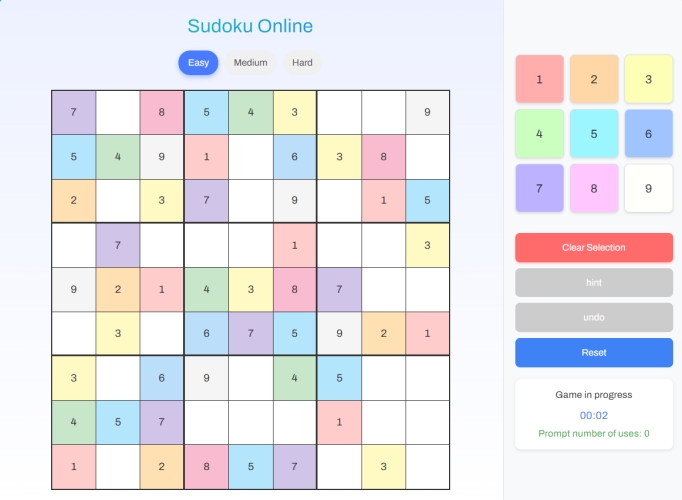
| Strategy | How It Works | Difficulty Level |
|---|---|---|
| X-Wing | Look for two rows or columns where a number can only appear in the same two positions, forming an "X" pattern that eliminates other possibilities. | Intermediate to advanced; it takes practice to spot. |
| Swordfish | Similar to X-Wing but involves three rows or columns. It's rarer but powerful. | Advanced; I've only used it a handful of times. |
| Coloring | Use two colors to track possible placements of a number, which can reveal contradictions. | Expert; it can be confusing at first. |
I remember the first time I tried an X-Wing—it felt like I'd unlocked a secret code. But honestly, it's not for everyone. Some puzzles don't need it, and I've seen people overcomplicate things by forcing these techniques. My advice? Stick to the basics until you're consistently solving medium puzzles. Then, dabble in advanced methods. There's no rush in learning how to play sudoku; enjoy the journey.
Common Sudoku Mistakes and How to Avoid Them
We all make errors, especially when we're new to how to play sudoku. Here are some I've encountered, and how to steer clear of them.
- Guessing: This is the biggest no-no. Sudoku is about logic, not luck. If you guess, you might build on a wrong assumption and waste time. I did this once—filled a whole puzzle based on a hunch, and it was all wrong. Had to start over. Instead, use elimination—if a number can't go somewhere, cross it off.
- Ignoring Pencil Marks: As I mentioned earlier, pencil marks are your best friend. They help you see possibilities without committing. I skipped them early on and regretted it.
- Not Scanning the Whole Grid: It's easy to get fixated on one area, but numbers in one part affect others. I learned to take breaks and look at the big picture.
Another thing: speed isn't everything. When I started, I'd rush to finish, and that led to sloppy errors. Now, I take my time, and my accuracy has improved. If you're stuck, move to another section. Sometimes, a fresh perspective helps.
Personal Experiences and Case Studies
Let me share a story from my sudoku journey. A few years back, I was on a long flight and decided to tackle a "hard" puzzle. I thought I had it all figured out, but then I hit a wall. I'd placed a 4 in what seemed like the right spot, but it blocked the entire subgrid. Turns out, I'd missed a single candidate in another row. It took me an hour to realize my mistake. But that experience taught me the importance of systematic checking. Now, I always do a quick scan after each placement.
I also have a friend who's a sudoku whiz. She taught me a cool trick: if you're learning how to play sudoku, start with smaller grids like 4x4 to build confidence. I tried it, and it worked wonders. We even had a competition once—I lost badly, but it was fun. These personal touches make the game more relatable. Sudoku isn't just about rules; it's about the stories we create while playing.
Frequently Asked Questions About How to Play Sudoku
Is sudoku a math game?
No, it's not. You don't need to do any calculations. It's purely logic-based, which is why I love it. As someone who's not great at math, I appreciate that it's accessible to everyone.
How long does it take to learn how to play sudoku?
It varies. For me, it took about a week of daily practice to feel comfortable with easy puzzles. But don't stress—some people pick it up in days, others in weeks. The key is consistency.
Can sudoku help with brain health?
Yes, definitely. Studies suggest that puzzles like sudoku can improve memory and reduce the risk of cognitive decline. I've noticed I feel sharper after a session.
What's the best way to practice how to play sudoku?
Start with easy puzzles and gradually move up. Use apps that offer hints—I did that initially, and it sped up my learning.
Are there different types of sudoku?
Absolutely! Beyond the standard 9x9, there are variants like killer sudoku or samurai sudoku. They add twists, but the core of how to play sudoku remains the same.
How do I avoid getting stuck?
Take breaks, switch focus, and use pencil marks. I also recommend joining online forums to share tips.
Is it cheating to use hints?
Not at all, especially when you're learning. I used hints for my first 10 puzzles, and it helped me understand patterns better.
What's the hardest part of learning how to play sudoku?
For me, it was overcoming the urge to guess. Once I trusted the logic, it became easier.
Tools and Resources for Sudoku Players
If you're serious about how to play sudoku, having the right tools can make a big difference. Here's a list of what I use:
- Apps: Sudoku.com or Brainium are great—they have different levels and timers. I use them daily.
- Books: Puzzle books are cheap and portable. I have a stack on my desk for quick breaks.
- Online Communities: Reddit has a sudoku subreddit where people share puzzles and advice. I've learned a lot from there.
I also keep a small notebook for pencil marks when I'm offline. It's old-school, but it works. And if you're competitive, try timing yourself—I do, and it adds an extra challenge.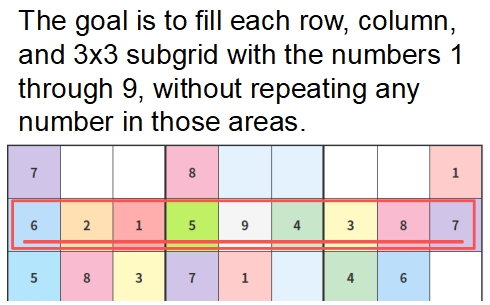
Putting It All Together: A Sample Sudoku Walkthrough
Let's go through a mini-example to tie everything together. Imagine a 3x3 subgrid with some numbers filled: [1, 2, 3 in the top row, 4, 5, 6 in the middle, and 7, 8, empty in the bottom]. Based on the rules, the missing number must be 9, because it's the only one left. This is a simple case of the single candidate technique. As you practice how to play sudoku, you'll start seeing these patterns automatically.
I recall a puzzle where I used a combination of strategies—started with single candidates, then moved to subset checking. It felt like solving a mystery. The more you play, the more intuitive it becomes. Don't get discouraged if it takes time; even experts started as beginners.
In the end, learning how to play sudoku is a journey of discovery. It's not about being perfect—it's about enjoying the process. I still have puzzles that stump me, but that's part of the fun. So grab a puzzle, take a deep breath, and start filling in those numbers. You've got this!